


When Is It Time to Move Your Parent to a Care Home? 10 Signs to Watch For
- bhargavi mishra
- Mar 9
- 5 min read

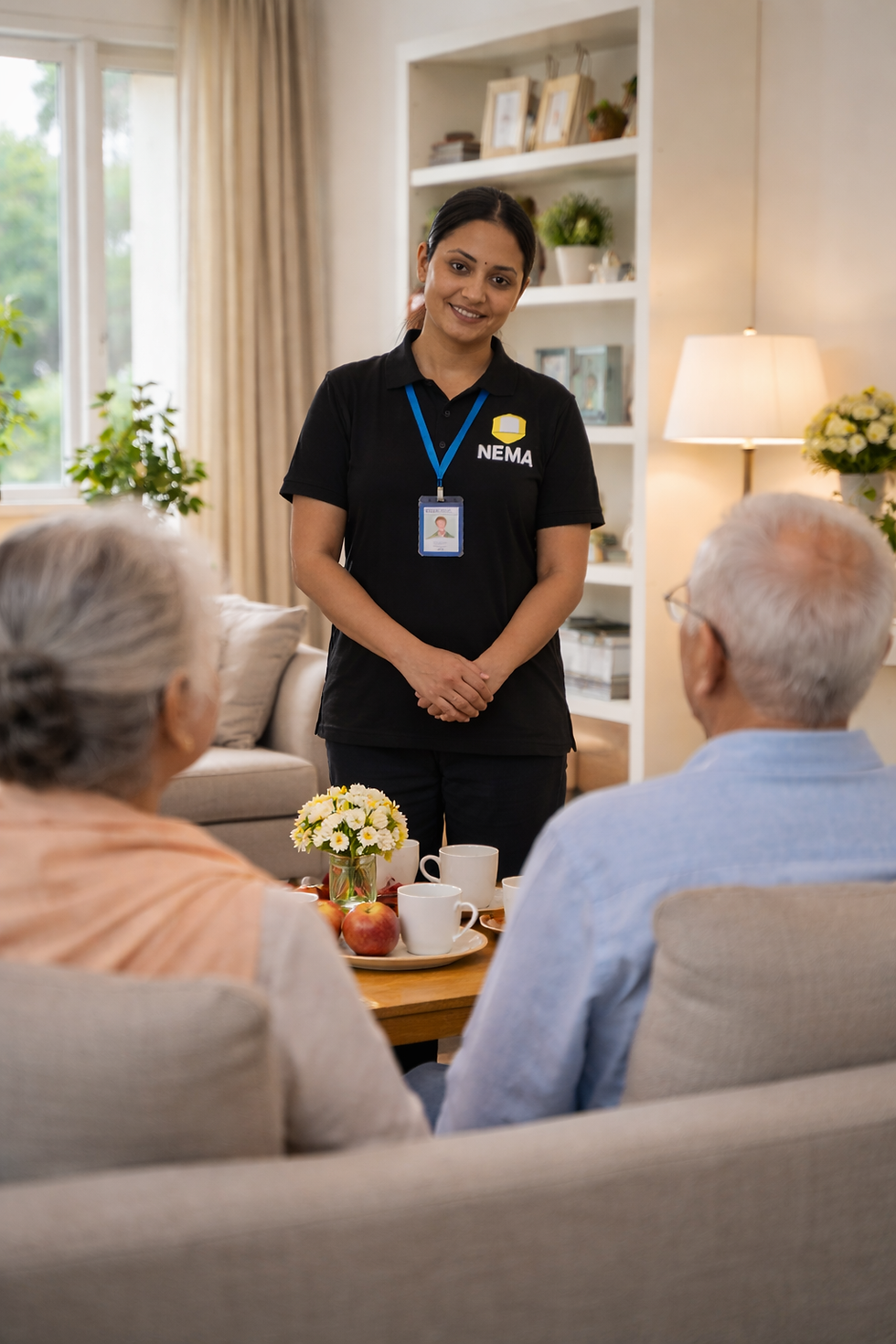
One of the most emotionally charged decisions a family in India will ever face is recognising that a beloved parent or grandparent can no longer safely live alone — or even with the family — without professional support. In our culture, placing a parent in a care home can feel like abandonment. But the truth is the opposite: choosing the right care home is one of the most profound acts of love a family can perform.
At NEMA Elder Care, Gurgaon's premier luxury assisted living facility, we speak with hundreds of families each year who waited too long — and hundreds more who made the decision at the right time and never looked back. This guide helps you identify the 10 key signs that your parent may need the kind of professional, round-the-clock care that only a specialist care home can provide.
Why This Decision Is So Difficult for Indian Families
In Delhi NCR, as in much of India, there is a deep cultural expectation that elderly parents will live with their children and be cared for within the family. This is beautiful in intention — but increasingly challenging in reality. Both partners in a household work full-time. Children live in smaller urban apartments.
The complexity of medical conditions like dementia, Parkinson's, or post-stroke care goes far beyond what a loving but untrained family member can manage.
The result is often exhausted, guilt-ridden family caregivers who are unable to provide the level of care their parents actually need — while the senior themselves suffers from inadequate support, social isolation, and unmanaged medical conditions. Recognising the signs early is not a failure. It is wisdom.
The 10 Signs Your Parent May Need a Care Home
1. Frequent Falls or Mobility Issues
Falls are the number one cause of serious injury in seniors. If your parent has fallen more than once in the past six months, or if you find yourself constantly worried about them navigating stairs, wet floors, or getting up at night, this is a critical red flag. At NEMA, our care homes in Gurgaon are purpose-designed for fall prevention — with handrails, non-slip flooring, 24-hour supervision, and physiotherapy on-site.
2. Forgetting Medications or Meals
Medication mismanagement is a silent killer among the elderly. Missing doses of blood pressure medication, taking double doses of blood thinners, or forgetting to eat entirely — these are common and dangerous occurrences in unsupervised seniors. Our trained nursing staff at NEMA manage every resident's medication schedule with precision, ensuring full compliance and monitoring for side effects.
3. Signs of Cognitive Decline
Increasing forgetfulness, confusion about dates or familiar surroundings, repeating questions, or getting lost in familiar areas are early warning signs of dementia or Alzheimer's disease. If your parent has received a dementia diagnosis or you suspect cognitive decline, a specialist memory care facility like NEMA provides structured routines, cognitive engagement activities, and a secure, calming environment that dramatically slows progression.
4. Declining Personal Hygiene
When a previously well-groomed parent stops bathing regularly, wears the same clothes for days, or neglects dental hygiene, it often signals depression, cognitive decline, or physical inability to manage self-care. This is not laziness — it is a medical signal. NEMA's trained caregivers assist residents with all Activities of Daily Living (ADLs) including bathing, dressing, and grooming, with full dignity and respect.
5. Social Withdrawal and Loneliness
Isolation is as dangerous to elderly health as smoking. Seniors living alone in Delhi NCR often go days without meaningful human interaction. This leads to depression, accelerated cognitive decline, and a loss of will to live. NEMA's care homes offer daily group activities, music therapy, yoga, cultural celebrations, and a warm community of peers — something no home setting can replicate.
6. Weight Loss or Poor Nutrition
If your parent is losing weight, skipping meals, or subsisting on biscuits and tea, their body and brain are being starved of essential nutrients. NEMA provides 3–5 chef-prepared, nutritionist-approved meals daily, tailored to each resident's dietary requirements, religious preferences, and medical conditions including diabetes, hypertension, and renal disease.
7. Caregiver Burnout in the Family
If you or your spouse are missing work, losing sleep, or feeling resentment towards caregiving responsibilities, this is a serious warning sign — for both you and your parent. Caregiver burnout leads to poor care quality, accidents, and broken family relationships. Choosing NEMA is choosing to give your parent the best possible care while giving yourself and your family the ability to be present as a loving son, daughter, or grandchild — not an exhausted nurse.
8. Worsening Chronic Medical Conditions
Diabetes, heart disease, COPD, kidney disease, Parkinson's — these conditions require consistent, expert medical monitoring. If your parent's chronic conditions are poorly controlled despite best family efforts, a care home with 24-hour nursing, regular doctor visits, and on-call specialist access is the medically appropriate solution.
9. Post-Hospitalisation Vulnerability
After a major surgery, stroke, or cardiac event, an elderly patient is at their most vulnerable. Hospital discharge is not the end of recovery — it is the beginning of the most critical phase. NEMA provides expert post-operative and rehabilitation care in a supportive environment, bridging the gap between hospital and full recovery far more effectively than home care alone.
10. Your Parent Lives Far From You or You Are Based Abroad
For NRI families or those living in other cities, the worry of an elderly parent living alone in Gurgaon or Delhi is constant and exhausting. NEMA provides complete peace of mind — regular video updates, detailed health reports, family liaison support, and the knowledge that your parent is in a safe, loving, medically supervised environment around the clock.
Why NEMA Elder Care Is Gurgaon's Most Trusted Care Home
NEMA Elder Care, located in Palam Vihar, Gurgaon, was founded with a single purpose: to create a care home that families of India-1 would be proud to place their loved ones in. Led by Dr. Chetna Jain — with over 30 years of medical experience in the UK and India — NEMA offers a boutique, personalised alternative to large institutional old age homes. Every resident receives an individualised care plan, a dedicated caregiver, and access to a full multidisciplinary team.
NEMA serves families across Gurgaon, Delhi, Noida, Faridabad, and beyond — including a significant number of NRI families who trust us with the care of their parents while they live and work abroad. Our residents do not feel like they are in a care home. They feel like they are at home — just a much better, safer, more joyful version of home.
Frequently Asked Questions
Q: What is the right age to consider a care home?
A: There is no fixed age — the decision is based on need, not age. Many NEMA residents are in their 70s and 80s, but we also care for younger seniors in their late 50s with early-onset dementia or serious medical conditions.
Q: Is it wrong to place my parent in a care home in India?
A: Absolutely not. Choosing a professional care home like NEMA means your parent receives expert, round-the-clock care that a family simply cannot provide alone. It is a loving, responsible decision.
Q: How do I start the process of admitting my parent to NEMA?
A: Call us on +91-888-223-8900 or visit nemacare.com to schedule a free assessment visit. Our clinical team will evaluate your parent's needs and recommend the most appropriate care plan.
📞 Ready to explore care options for your parent? Call NEMA Elder Care today on +91-888-223-8900 or visit nemacare.com to book a free facility visit. |
Comments